SERVICES · HEALTHCARE & DIAGNOSTICS
Always-on care needs an always-ready workforce.


Trusted by 2000+ enterprises across 70+ countries




The talent reality
Always on. Skills constrained. Constantly changing.

Talent Availability
Critical skills are capacity
Clinicians, nurses, technicians, lab professionals, phlebotomists and support teams are not interchangeable. When scarce roles stay vacant, service capacity comes under pressure.
Shift Dynamics
Every shift changes the picture
Rosters, leave, attendance, overtime, on-call requirements and multiple locations continuously change who is available where—and at what workforce cost.
Role Readiness
Readiness has to be visible
Qualifications, certifications, competencies and mandatory learning must remain current, while leaders need confidence that the talent deployed has the capability the role requires.
The connected talent journey for Healthcare and Diagnostics
Connect every talent decision to care readiness.
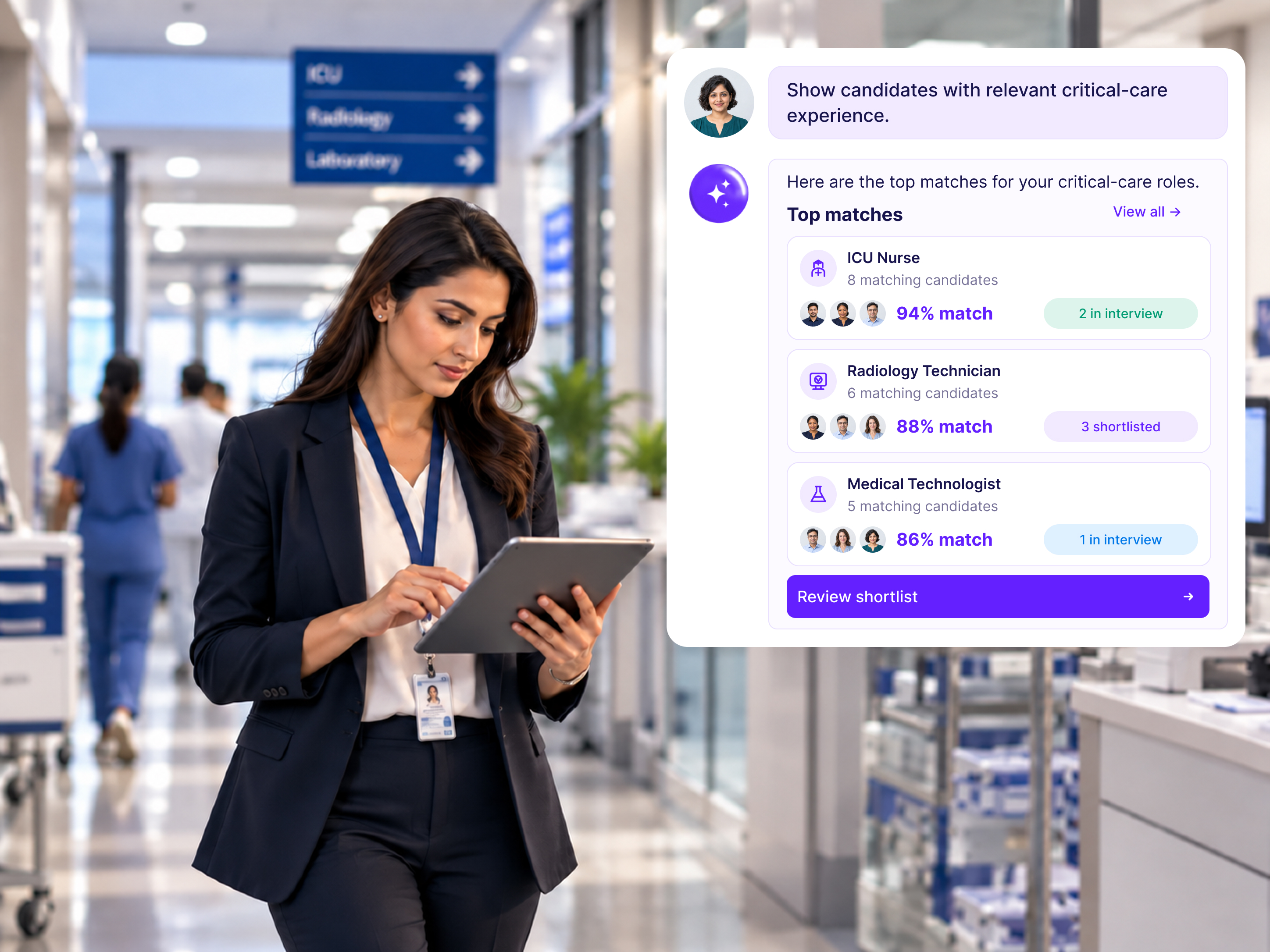
Fill critical roles before vacancies become service constraints.
Move from requisition to onboarding with greater speed and context. AI-native assistance helps teams parse profiles, identify relevant candidates, support structured interviews and carry qualification, experience and role context forward into the talent journey.
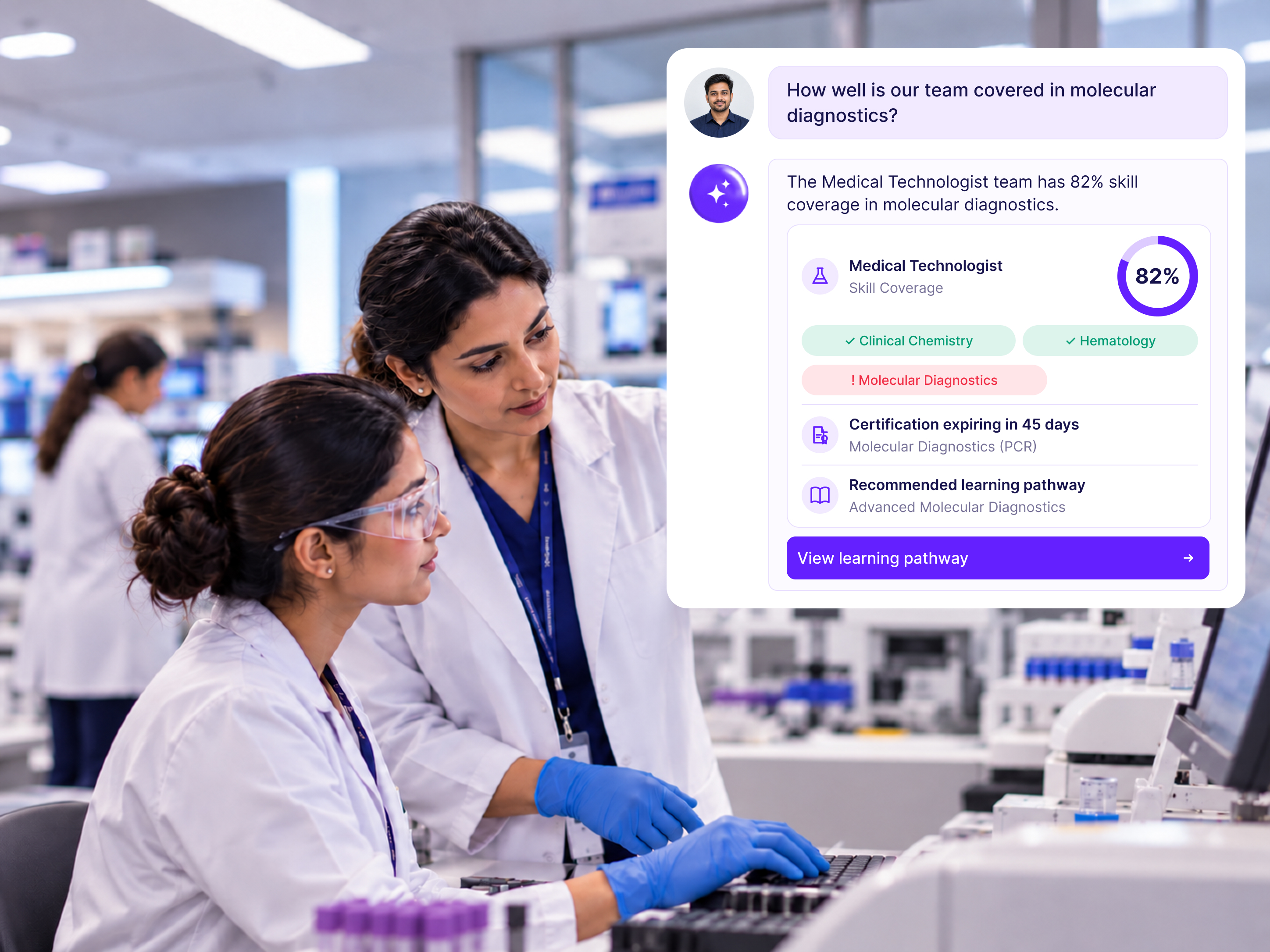
Make skills, competencies and career pathways visible.
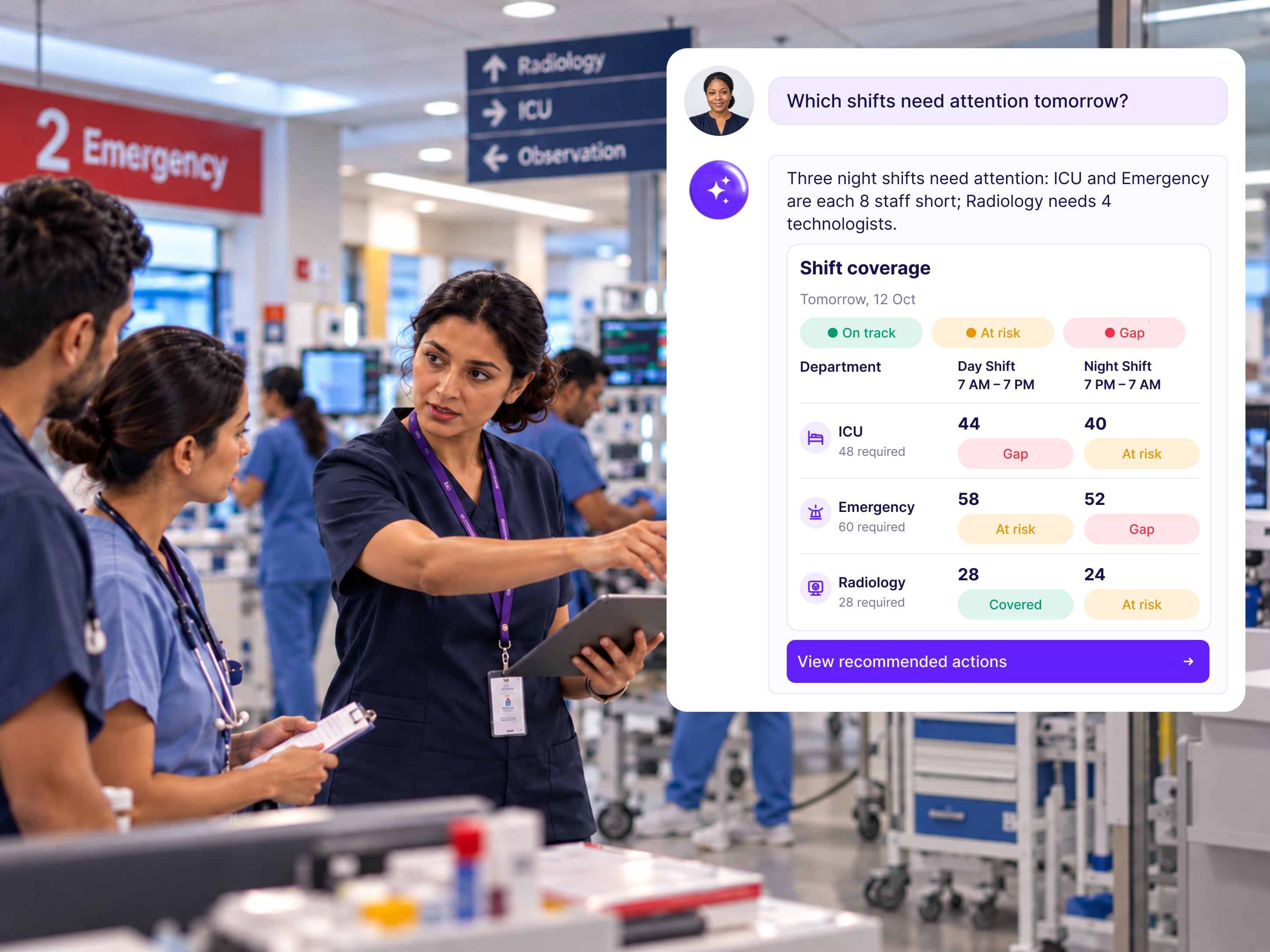
Keep every shift accurate, ready and compliant.
Manage time, attendance, overtime and on-call requirements, while monitoring credentials, certifications and mandatory compliance requirements.
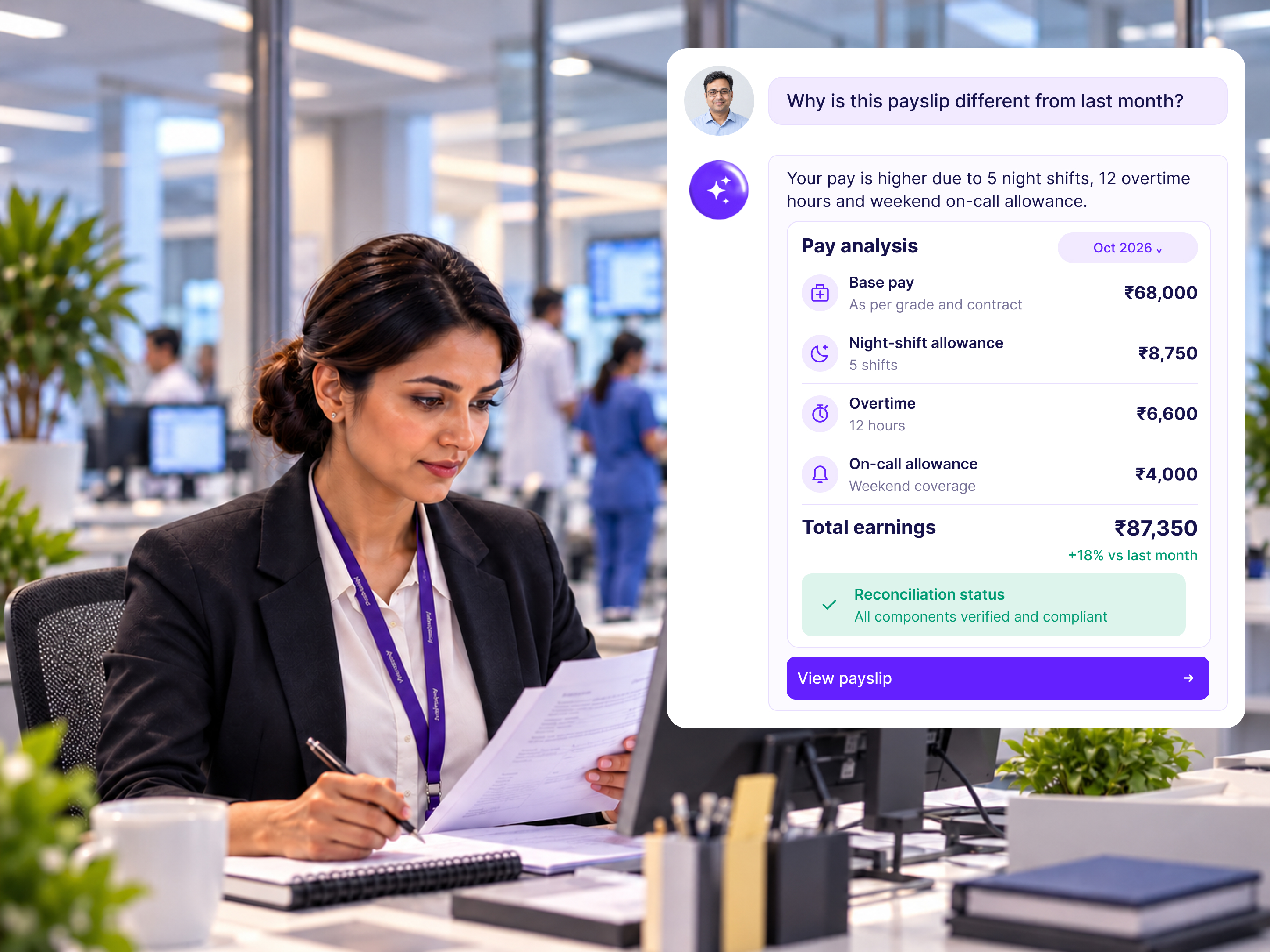
Connect the work performed to the pay earned.
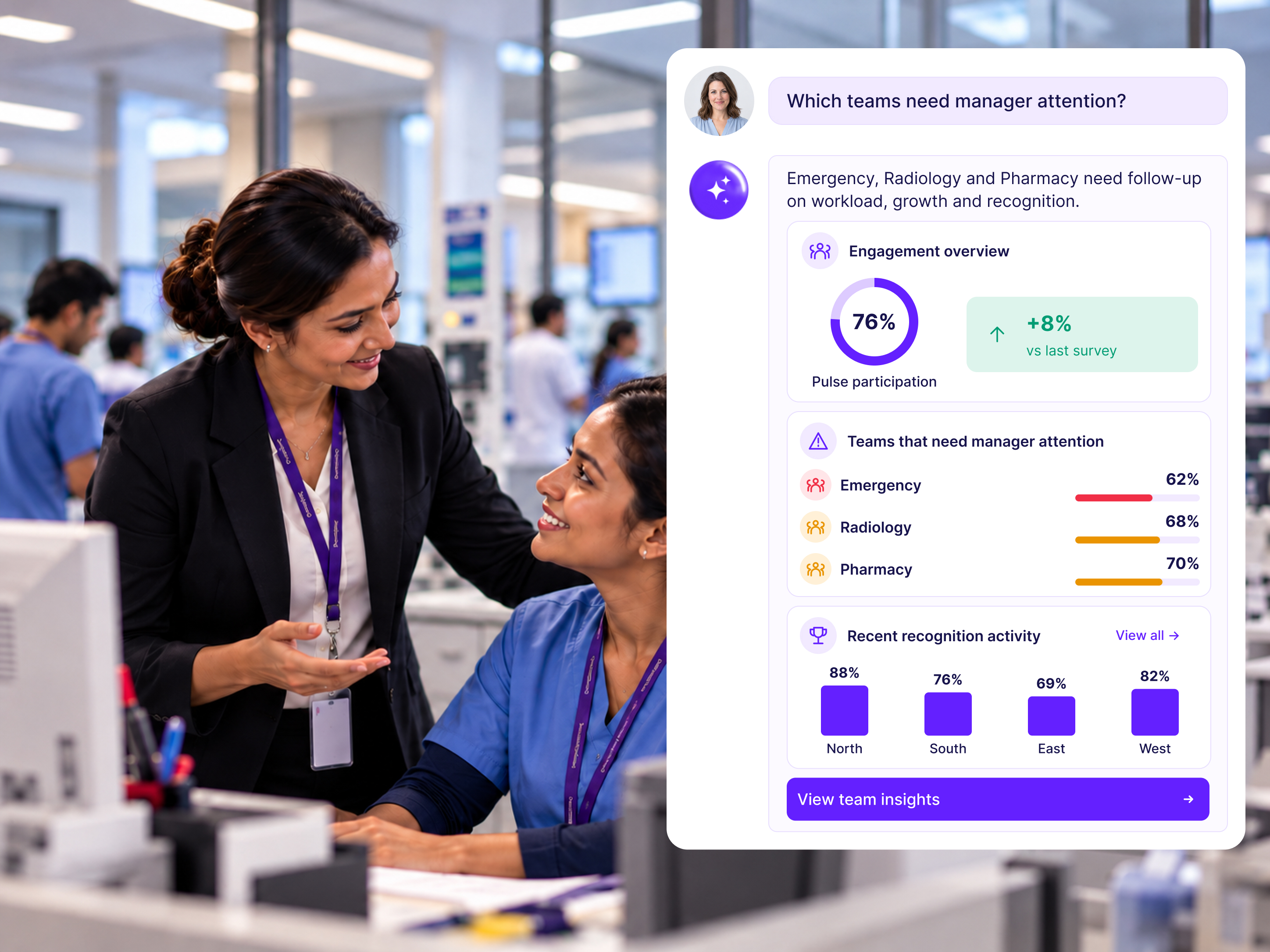
Hear strain earlier. Recognize contribution consistently.
Fill critical roles before vacancies become service constraints.
Move from requisition to onboarding with greater speed and context. AI-native assistance helps teams parse profiles, identify relevant candidates, support structured interviews and carry qualification, experience and role context forward into the talent journey.
Make skills, competencies and career pathways visible.
Keep every shift accurate, ready and compliant.
Manage time, attendance, overtime and on-call requirements, while monitoring credentials, certifications and mandatory compliance requirements.
Connect the work performed to the pay earned.
Hear strain earlier. Recognize contribution consistently.
Configure around care delivery—not the other way around.

Different roles. Relevant experiences.
Configure role-based experiences for clinicians, nurses, lab teams, frontline employees, managers and HR—so each sees what matters to the work they perform.

Processes that reflect care operations
Configure onboarding, transfers, approvals, employee services, shift exceptions and location-specific processes around how your care network actually operates.
Connect the workforce ecosystem
Connect HCM with identity, time, payroll, learning and other enterprise systems while allowing clinical and workforce platforms to retain their appropriate roles.

See readiness before it becomes risk
Configure views around vacancies, skill gaps, absence, overtime, attrition and payroll exceptions—giving different leaders the context they need to act.

Govern access around responsibility
Configure roles, permissions, entity access and audit controls around sensitive workforce information, organizational structures and local requirements.
Use AI with context and accountability
Embed AI-native agents within governed access, human oversight and explainable processes, with model flexibility based on the requirements of each use case.